Tram 28 and Lisbon at Eye Level
A slow ride through Lisbon's most iconic tram line — and the city it quietly reveals.
3/14/20262 min read
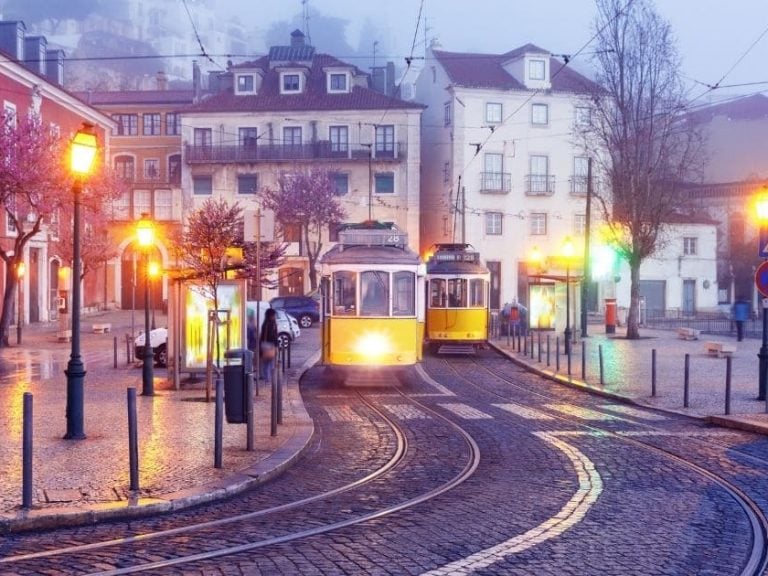
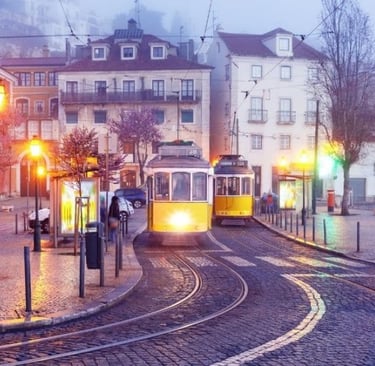
Lisbon does not reveal itself from above. It reveals itself from inside a narrow yellow tram, moving slowly through streets that were never built for speed.
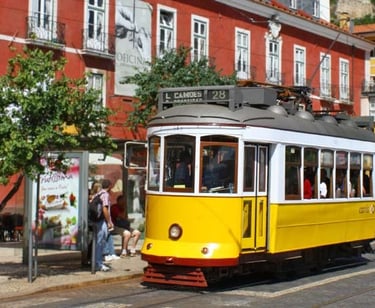
The Number 28 has been running since 1914. A small wooden car, painted yellow, threading through alleys so tight that the walls seem close enough to touch from the window. It climbs, descends, curves — following the logic of the hills, not of any modern plan.
Boarding at Martim Moniz, you enter something that still feels genuinely functional. This is not a heritage attraction dressed up for visitors. People use it to get to work, to visit a neighbor, to carry groceries home. That ordinariness is exactly what makes the ride worth taking.
The tram moves slowly enough to look.
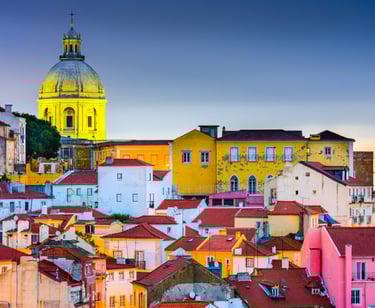
Alfama appears first — whitewashed walls, laundry lines crossing narrow alleys, the distant sound of fado drifting from somewhere unseen. Then Graça, quieter and higher, where the city opens briefly into a wider sky. Then the long descent toward Estrela, where the light shifts from warm to silver and the streets widen almost without warning.
Each neighborhood is a different chapter. Each stop, a breath.
From the window, Lisbon does not perform. It simply continues — indifferent to the traveler, faithful to itself. A woman waters geraniums on a second-floor balcony. Two men talk outside a café that has probably been there for forty years. A cat sits on a doorstep and does not move as the tram passes.
These are not moments designed to be seen. They simply exist.
The ride from end to end takes less than an hour. But time on the 28 does not move in the usual way. The hills slow it down. The curves interrupt it. The window turns the city into something resembling a film — quiet, unhurried, without a clear plot.
Lisbon seen from this tram is not a postcard.
It is something more honest than that.
The noise stays outside. The light comes in sideways. And for a while, you are simply a passenger — moving through a city that has never needed to explain itself.

TravelScope
Curated travel experiences worth your time
© 2026 MosTag Studio. All rights reserved.
TravelScope is a curated travel platform available at atravelscope.com