Rome, in Layers
History is not behind you here. It surrounds you.
JOURNAL
2/18/20262 min read
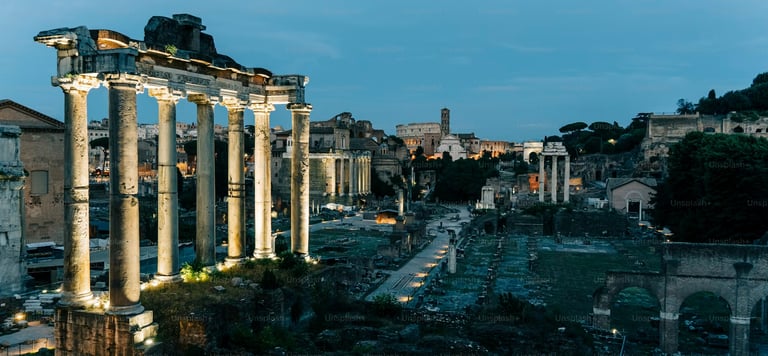
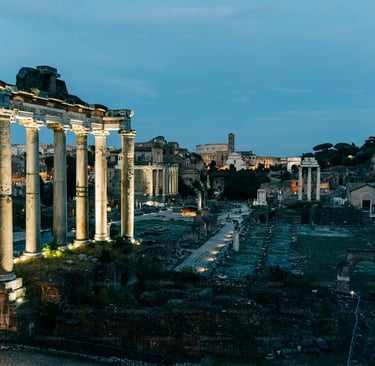
Rome is not a city you visit. It is a city you enter — layer by layer.
Rome unfolds as a palimpsest of stone, a place where time does not pass but settles. Architecture here is not simply built; it accumulates. Baroque flourishes rest against imperial arches, Renaissance façades rise beside fractured columns, and the ancient world refuses to disappear.
The Colosseum still holds its defiant curve against the sky. The Pantheon gathers light through its oculus the way it has for nearly two millennia. Walk a few steps and centuries shift beneath your feet. In Rome, history is not arranged in chapters — it is layered, visible, tactile.
Yet to see Rome only through its monuments is to miss its living layer. It is the laughter spilling into narrow streets in Trastevere. It is the quiet ritual of espresso at a sunlit counter. It is market stalls bursting with color beside churches older than most nations. Here, modern life does not replace the past — it rests upon it.
And then there is the invisible layer — memory, atmosphere, the subtle weight in the air. The scent of warm bread mingles with the faint breath of the Tiber. Footsteps echo through the Forum long after the crowds have gone. You begin to feel that what was once lived here has never fully left.
To walk through Rome is not to move through space, but through depth. Every corner holds sedimented stories. Every stone carries a whisper. And slowly, almost without noticing, you become part of its layers too.
Practical Layer: How to Experience Rome
If you want to truly experience Rome in layers, slow down your itinerary.
Start early in the morning at the Colosseum and Roman Forum — not just to avoid crowds, but to feel the scale before the city fully awakens. Walk rather than rush. Let distances reveal transitions between centuries.
Spend late afternoons in neighborhoods like Trastevere or Monti. These are the living layers — where laundry hangs above cobblestones and conversations stretch long into the evening.
Visit the Pantheon close to sunset, when the light softens and the space becomes almost contemplative.
And most importantly: do not try to “see everything.” Rome rewards depth, not speed.
The right way to experience a city is not faster. It is deeper.
And when a journey is shaped with intention,
it becomes something you carry long after you leave.
Continue Exploring
TravelScope
Curated travel experiences worth your time
© 2026 MosTag Studio. All rights reserved.
TravelScope is a curated travel platform available at atravelscope.com